
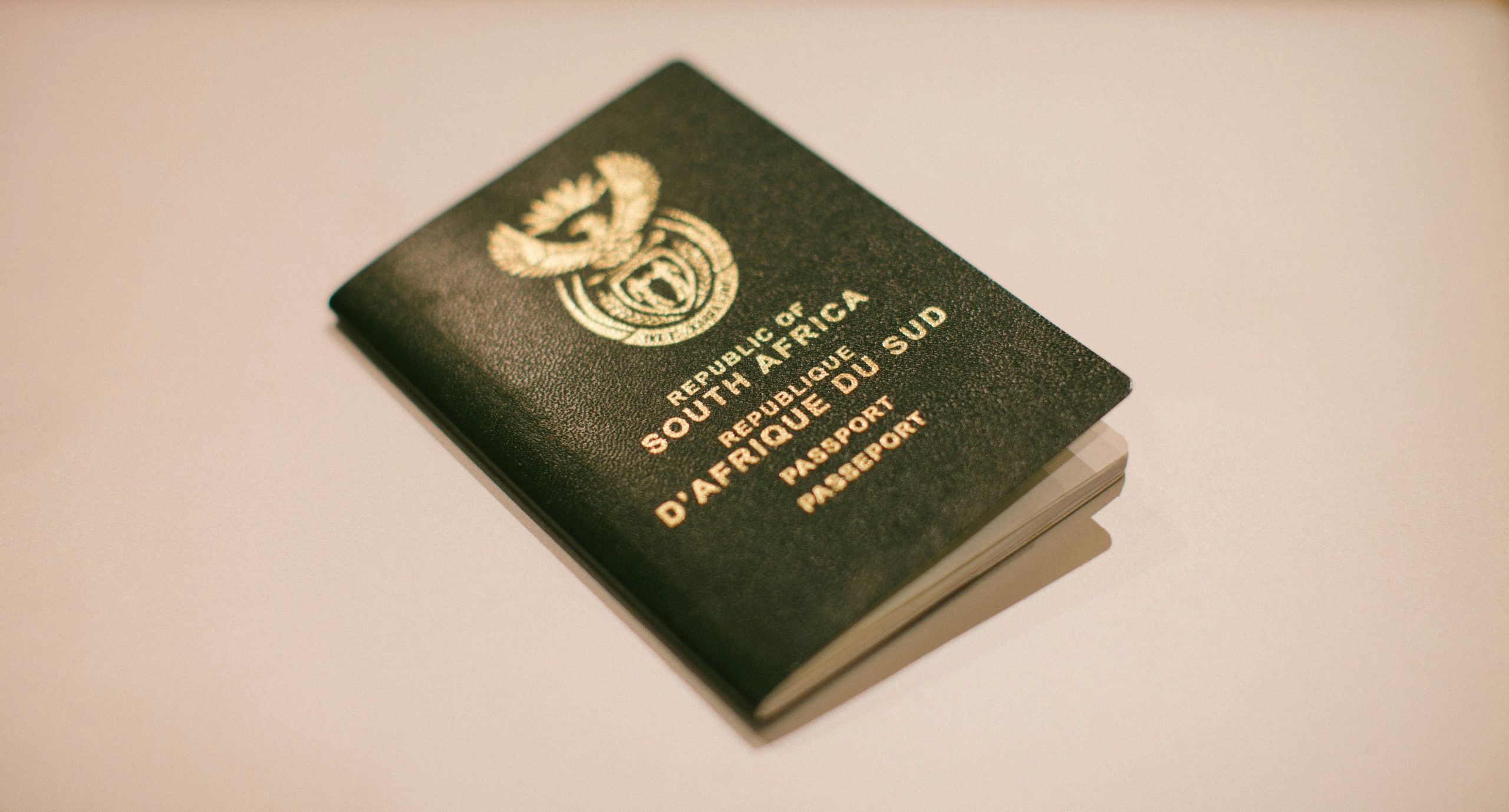
Who is an illegal immigrant?
An illegal immigrant is a foreign national who enters, resides, or works in a country without the necessary legal authorisation or documentation. A person who might be considered an illegal immigrant, is someone who do not possess “immigration documentation” which allows him/her to be legal in a particular country. Therefore, this classification applies to the individuals who cross borders without inspection or those who entered legally but remained after their authorised visa or permit expired without renewing their documents.
Generally, people become illegal (or undocumented) immigrants in one of two main ways:
- Entry without inspection: bypassing official border checkpoints or utilising fraudulent documents to sneak into a country of not your origin.
- Visa overstaying: entering legally with a valid visa (such as a tourist, student, or work permit) but remained in that country after the expiration date listed on the document without renewing it.
Being an illegal immigrant in South Africa generally results in arrest, detention, and deportation. With intensified enforcement by the Department of Home Affairs, undocumented individuals are subject to swift removal and lifetime bans from legally re-entering the country.
Official estimates indicate there are between 2.4 million and 3.1 million foreign-born residents in South Africa, accounting for roughly 4% to 5% of the total population.
The Immigration Act No.13 of 2002
9. (I) Subject to this Act, no person shall enter the Republic at a place other than a port of entry.
(2) Subject to this Act, a citizen or a resident shall be admitted, provided that he or she identifies himself or herself as such in the prescribed manner and, in the case of a resident, the immigration officer records his or her entrance.
(3) No person shall leave the Republic-
(a) unless in possession of a passport, or a certificate issued by the Department upon application in lieu thereof;
(b) unless, if he or she is a person under the age of 16 years who does not hold a passport, he or she is accompanied by his or her parent who holds a passport in which his or her name was entered in terms of the provisions of the South African Passports and Travel Documents Act. 1994 or on behalf of any government or international organisation recognised by the Government of the Republic; and
(c) except at a port of entry, unless-
(i) in possession of a certificate by the Department granting permission upon application to leave the Republic at a place other than a port of entry within a certain period not exceeding six months at a time, provided that for good cause an immigration officer may withdraw such permission; or
(ii) exempted by the Minister, as he or she deems fit, on recommendation of the Director-General, which exemption may be withdrawn by the Director-General at any time; and
(d) unless, in the case of a resident, the departure is recorded by an immigration officer.
(4) A foreigner may only enter the Republic-
(a) by producing to an immigration officer his or her passport to be valid for no less than 30 days after the expiry of the intended stay, and
(b) if issued with a valid temporary residence, as set out in this Act, and may only depart as set out in this Act.
- (1) Upon admission, a foreigner may enter and sojourn in the Republic only if in possession of a temporary residence.
(2) Subject to this Act, upon application and upon prescribed examination at the port of entry, one of the temporary residences set out in sections 11 to 23 may be issued to a foreigner.
(3) If issued outside the Republic, a temporary residence is deemed to be of force and effect only after an admission.
(4) A temporary residence is to be issued on condition that the holder is not or does not become a prohibited or an undesirable person.
(5) For good cause, as prescribed, the Department may attach reasonable individual terms and conditions to a temporary residence.
(6) Subject to this Act, a foreigner may change his or her status while in the Republic.
- (1) The holder of a permanent residence permit has all the rights, privileges, duties and obligations of a citizen, save for those rights, privileges, duties and obligations which a law or the Constitution explicitly ascribes to citizenship.
(2) Subject to this Act, upon application, one of the permanent residence permits set out in sections 26 and 27 may be issued to a foreigner.
(3) A permanent residence permit is to be issued on condition that the holder is not a prohibited person, and subject to section 28 of this Act.
(4) For good cause, as prescribed, the Department may attach reasonable individual terms and conditions to a permanent residence permit.
Can you Work if you are an Illegal Immigrant in that Country?
It is illegal to work in South Africa if you do not have the necessary legal status, valid permits, or a work visa. Under the Immigration Act, it is a criminal offense for employers to hire undocumented foreign nationals. Nevertheless, many employers have long assumed that illegal immigrants or employees without work permits have no legal rights in South Africa. Many employers have consequently mistreated illegally employed staff believing that such employees have no recourse to labour law. That is, employers have paid illegal immigrants low wages, deprived them of employee benefits and have dismissed them at will. They have based their actions on the assumption that their so called ‘illegal employees’ are unable to use the law to take the employer to task. However, it has recently been confirmed that this type of employer is labouring under a dangerous misapprehension (Ivan Israelstam). In the case of Discovery Health Ltd vs CCMA & others (CLL Vol. 17 April 2008) Mr Lanzetta, an immigrant, obtained a temporary residence permit and later a work permit to work for a business called MPCS. He later joined Discovery Health as a call centre agent before his work permit was renewed. He claimed that Discovery had delayed giving him the documents he needed to renew his work permit which then expired. Discovery then terminated his employment on the grounds that his continued employment would breach section 38(1) of the Immigration Act that effectively prohibits persons from employing foreigners whose status does not authorise their employment. Lanzetta then referred a dispute of unfair dismissal to the CCMA. Discovery then contested the CCMA’s jurisdiction to consider the dispute on the grounds that his employment contract had been voided by his illegal status and that Lanzetta was therefore not an employee. It is law that the CCMA does not have jurisdiction over cases referred by people who are not employees. The CCMA decided that, as long as an employment relationship existed it did have jurisdiction to deal with the matter. The employer, dissatisfied with this jurisdictional finding, took it on review to the Labour Court.
The Court found that:
Although Lanzetta’s employment status may have been illegal he was resident in South Africa legally. It had been the employer and not Lanzetta who had contravened the Immigration Act because the wording of that act prohibited employers from employing certain foreigners rather than prohibiting the foreigners from accepting employment. Section 23 of the Constitution provides that ‘everyone’ has the right to fair labour practice. There is no indication in the Constitution or in the Immigration Act that illegally employed foreigners are excluded from this constitutional right.The Immigration Act’s prohibitions against the employment of so called ‘illegal’ foreigners does not void the employment contract of such a foreigner.
The definition of an employee as per the Labour Relations Act (LRA) does not require there to be an employment contract in order for a person to be an employee. Neither does section 23 of the Constitution require the existence of an employment contract. International law and ILO Convension 87 supports this principle. The definition of employee does extend to people who work without the existence of a contract. The Court therefore agreed with the CCMA that Lanzetta was an employee in terms of labour law and that the CCMA did have jurisdiction to consider his dispute.

